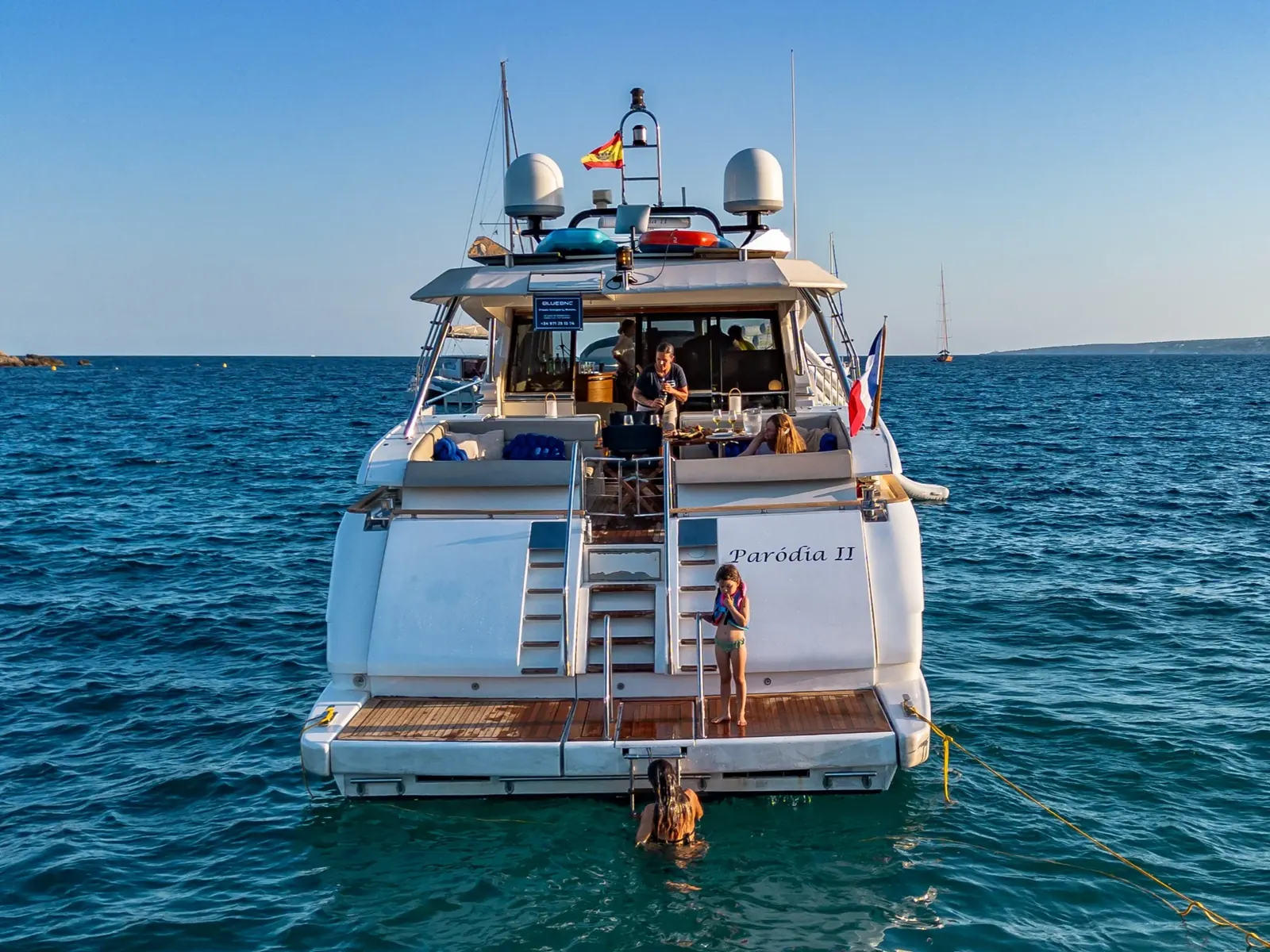
In high season a charter yacht in Mallorca can have less than a day between one group of guests and the next. Most of that time goes on cleaning, laundry and provisioning, and the technical side gets squeezed. A fault found at the turnaround is a parts order and an hour's work. The same fault found by guests at anchor on the second day is a lost day of their charter.
Blueward Marine began as the technical team behind Bluebnc Yachting's charter and management fleet in Mallorca, so turnarounds are familiar ground. This is the order we suggest to captains and engineers. It assumes a motor yacht with main engines, one or two generators, air conditioning, a watermaker and a tender, and it doesn't replace the builder's or the equipment manufacturers' maintenance schedules.
Before the guests leave: ask, then write it down
The crew notice things guests never mention. Before the last guests go ashore, take ten minutes with the crew:
- Alarms. Which alarms came up during the week, on which machine, and what was done about them?
- Comfort complaints. Cabins that stayed warm, a toilet that blocked, a smell in a cabin, low water pressure, a noise at night.
- Hours. Write down the hours on each main engine and generator at the start of the turnaround. A week at anchor can add a lot of generator hours, and most service intervals are set in running hours as well as months.
- Fault logs. Many engine displays, generator panels and air conditioning controllers keep an alarm history. Photograph it before anyone clears it.
Engine room walk-round
About thirty minutes, with a torch and a rag:
- Levels. Engine oil, gearbox oil, generator oil, and coolant on each engine and generator (only once they're cool). Check the hydraulic tank too if stabilisers, a passerelle or thrusters run from it.
- Leaks. Look under every engine and generator for oil, coolant or diesel. A clean drip tray makes the next new leak obvious.
- Seawater strainers. Main engines, generators, air conditioning and watermaker. Close the seacock first. After a week of anchoring in Mallorca they often hold Posidonia leaves and plastic.
- Belts and hoses. Cracks, glazing, rubbing marks, and loose clamps on the seawater side.
- Fuel. Drain the water separators and note what came out. Check the fuel level against the next itinerary and confirm when bunkering is booked.
- Bilges. Normal levels, pumps that cycle as they should, float switches that move freely.
- Batteries and chargers. No faults showing on the chargers or inverters, and normal battery voltage at rest.
Generators
At anchor the generator often runs day and night, so it gets more hours in a charter week than the main engines.
- Compare hours with the service interval and book the service before the next charter if it falls due mid-week.
- With the generator running, check for steady exhaust water flow.
- If a generator shut down during the charter, find out why before the next guests board. Our guide to a generator that keeps shutting down lists the usual causes.
- If you have two, note the hours on each so their servicing can be planned together.
Air conditioning
In July and August most comfort complaints are about cabins that don't cool.
- Run every cabin and saloon unit and feel the air at the outlet.
- Clean the return-air filters.
- Check the condensate drains run freely. Standing water in a condensate tray is a common cause of a musty smell in a cabin.
- Clean the air conditioning seawater strainers. Seawater flow matters more than anything else in summer, as our guide to air conditioning in August explains.
- On chiller systems, look at the chilled-water temperature and any flow alarms in the log.
Watermaker and fresh water
- Compare the last run's output and salinity with the log. If output has dropped or salinity has risen, see our guide to low watermaker output.
- Don't run the watermaker in harbour water.
- If the freshwater pump keeps cycling with every tap closed, look for a leak, a passing non-return valve or a waterlogged accumulator.
- Check the hot water reaches temperature in every cabin.
Toilets and holding tanks
A blocked toilet on the first night is a bad start to a charter.
- Flush every head.
- On vacuum systems, listen to the vacuum pump. If it keeps running with nobody using the toilets, the system is leaking somewhere.
- Empty the holding tanks before the next guests board and check the gauges read empty afterwards.
Deck equipment, stabilisers and tender
- Windlass and anchor. Run the windlass and check the chain counter if one is fitted.
- Passerelle and swim platform. Operate them through their full travel and look for hydraulic oil at the rams.
- Thrusters. A short test of each.
- Stabilisers. Check the hydraulic level, look for leaks and clear any alarms with their cause noted. Our guide to zero-speed stabilisers covers what the system needs at anchor.
- Tender. Start the engine, check fuel, the kill cord and the tender's bilge. Put electric water toys on charge.
Navigation and communications
Power up the helm, check the displays have a GPS position, AIS is running and the VHF works. If something is missing, our guide to helm electronics fault-finding has the first checks.
What to log, and when to call an engineer
| System | At the turnaround | Call an engineer if |
|---|---|---|
| Main engines | Levels, leaks, strainers, alarm history | An alarm keeps coming back, oil or coolant is being lost, or there's water in the fuel every time |
| Generators | Hours, oil, exhaust water flow | It shut down under load, or a service falls due before the next turnaround |
| Air conditioning | Every cabin, filters, strainers | A zone stays warm with clean filters and strainers |
| Watermaker | Output and salinity against the log | Output is down or salinity is up |
| Toilets | Every head, vacuum pump, tanks | The vacuum pump runs with no use, or blockages repeat |
| Stabilisers | Hydraulic level, leaks, alarms | Any alarm you can't explain, or a fin that doesn't centre |
| Tender | Start, fuel, kill cord | It won't start, or it overheats |
Anything in the right-hand column is worth sending to an engineer before the next guests arrive, so parts can be ordered while there's still time.
Getting it fixed before the next charter
You can book a service online, describe what the crew reported and upload photos of the fault log. Our AI technical intake asks the follow-up questions an engineer would ask and passes a structured brief to the team, so we arrive with the right parts. For anything that can't wait, call +34 971 251 374 or WhatsApp +34 674 427 692 at any hour. Our emergency response in Mallorca is within two hours.
The main engine service, generator service, air conditioning and watermaker pages explain the scheduled work that keeps turnarounds short.