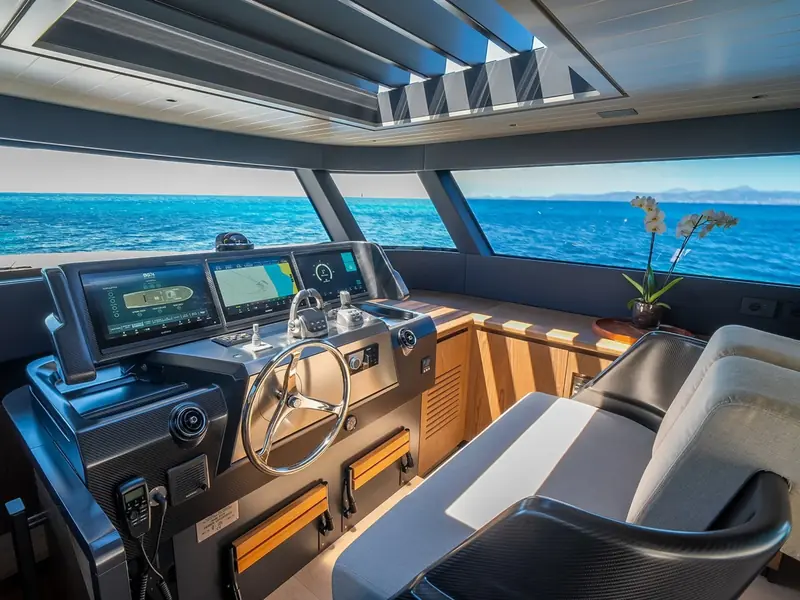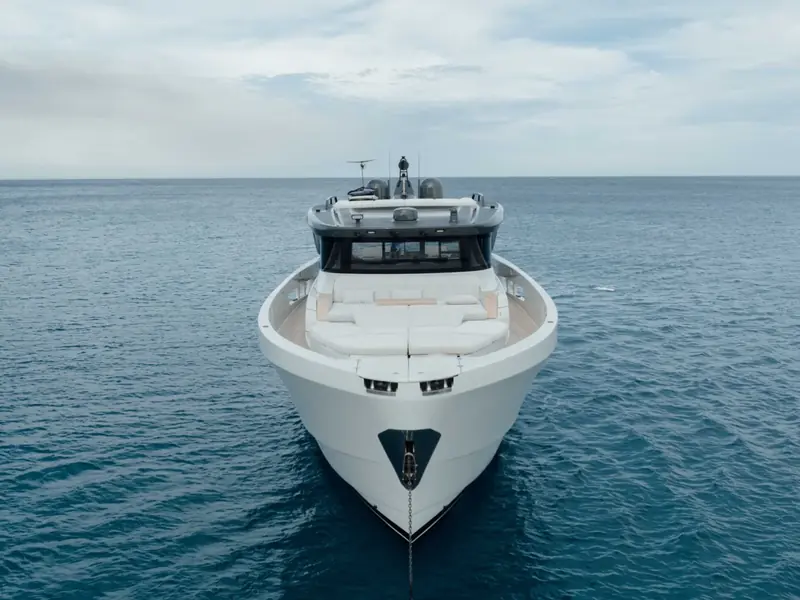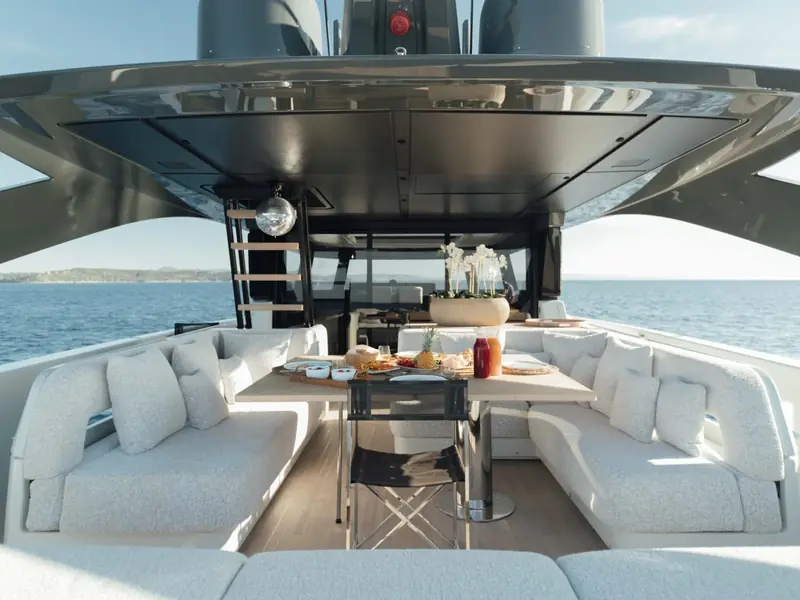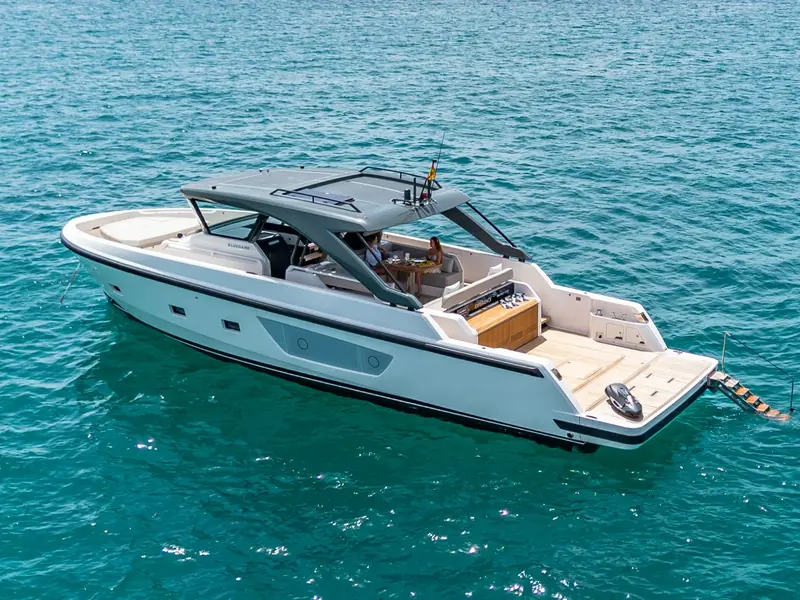
Bluegame yacht service in Mallorca

Blueward Marine services and repairs Bluegame BG54 and BG74 yachts across Mallorca, with mobile support and a Palma workshop. We cover Volvo Penta engines, IPS pods and controls, cooling circuits, hydraulics, generators, air conditioning, stabilisers, watermakers and onboard electrical systems.

Bluegame became part of the Sanlorenzo Group in 2018.

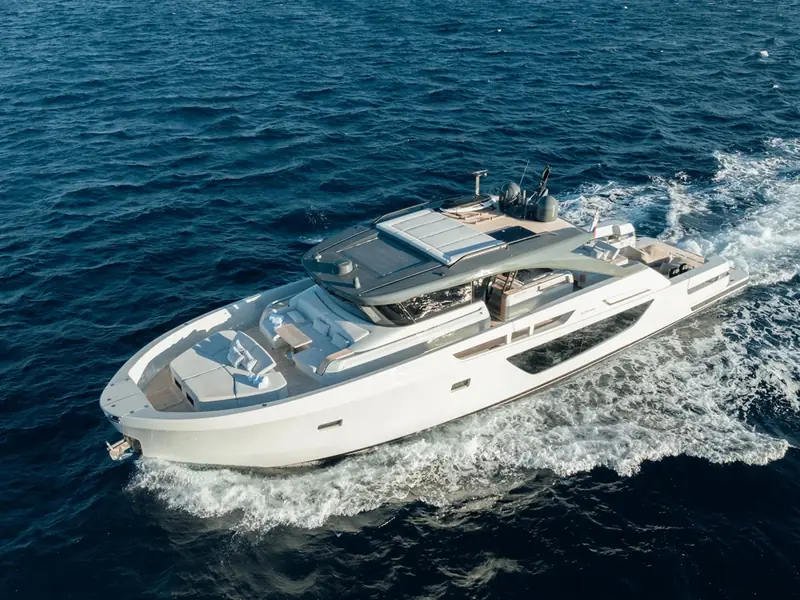
PETITCHET II yacht cruising at speed on the open sea, showing the foredeck sunpads and hardtop.
Photo: PETITCHET II, Bluegame BG74. Bluebnc Yachting managed fleet.
01

Bluegame yachts in the Bluebnc managed fleet

Bluebnc Yachting, our sister company, manages these yachts in Mallorca and works with Blueward Marine as its engineering company. Yacht figures come from each yacht's public Bluebnc listing; model figures come from the builder documents and tests listed at the foot of the page. Bluebnc Yachting

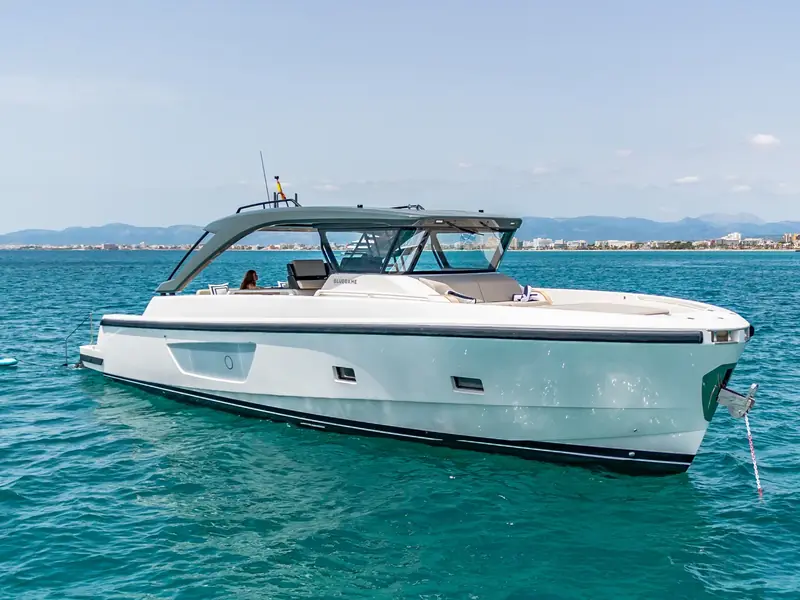
Yacht EXPERIENCE, a Bluegame 54, anchored in calm turquoise water with a white hull and grey hardtop.

EXPERIENCE

Bluegame 54

Built
2024
Length
16.5 m
Listed power
1,250 hp
Fuel capacity
1,800 L
See EXPERIENCE on Bluebnc

LIQUID SPIRIT

Bluegame BG54

Built
2024
Length
16.5 m
Fuel capacity
1,800 L
See LIQUID SPIRIT on Bluebnc

Bluegame publishes the BG54 with twin Volvo Penta D11 IPS800 engines at 625 HP each as standard, or twin Volvo Penta D11 IPS950 engines at 725 HP each as an option, both driving IPS pods. EXPERIENCE and LIQUID SPIRIT are listed as 2024 BG54s at 16.5 m with 1,800-litre fuel capacity. EXPERIENCE is listed at 1,250 HP total, consistent with the twin 625 HP standard package, and its listing includes stabilisers.

Engines (published)
2 x Volvo Penta D11 IPS800, 625 HP, or D11 IPS950, 725 HP
Drive
Volvo Penta IPS pod drives
Stabilisation
Stabilisers listed on EXPERIENCE

First checks on this model

  • Record both D11 engine and IPS serial numbers, operating hours, alarm history and software status before setting the service scope.
  • Inspect IPS drive oil, propellers, anodes, seals and bellows, then check for fishing-line damage, impact marks and galvanic corrosion.
  • Function-test helm and joystick commands through ahead, astern and steering movements, recording delayed response, vibration or stored faults before sea trials.
  • Clean the engine-cooling strainers and inspect heat exchangers, seawater pumps, hose clamps and exhaust temperatures after operation in warm or debris-laden water.
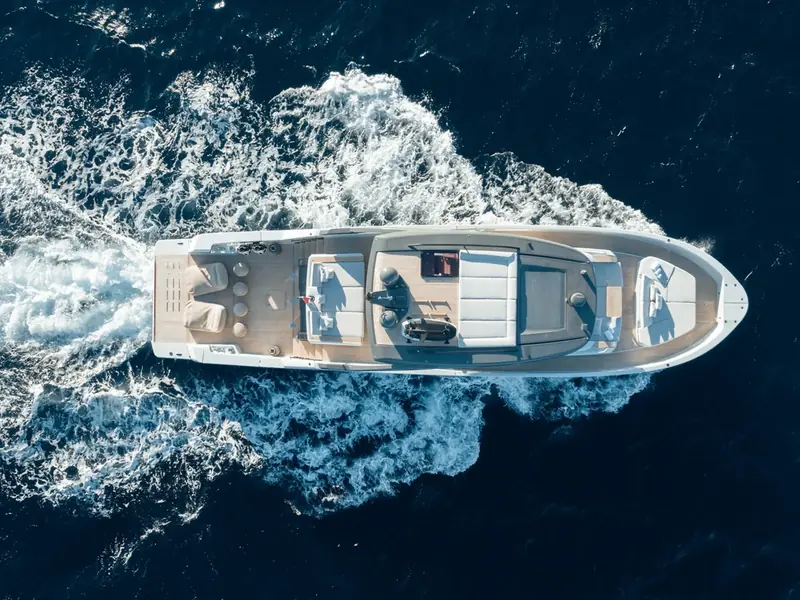
PETITCHET II motor yacht seen from directly above while cruising at speed in dark blue water.

PETITCHET II

Bluegame BG74

Built
2024
Length
22.6 m
Listed power
2,000 hp
Fuel capacity
4,000 L
See PETITCHET II on Bluebnc

Bluegame publishes the BG74 with twin Volvo Penta D13-IPS1200 engines at 900 HP each as standard, with twin Volvo Penta D13-IPS1350 engines at 1,000 HP each as the higher-power option. Both packages use IPS pod drives. PETITCHET II is listed as a 2024 BG74 with 2,000 HP total, consistent with the twin 1,000 HP option, plus 4,000 litres of fuel and 1.6 m draft.

Engines (published)
2 x Volvo Penta D13-IPS1200, 900 HP, or D13-IPS1350, 1,000 HP
Drive
Volvo Penta IPS pod drives

First checks on this model

  • Record both D13 engine and IPS serial numbers, operating hours, fault history and completed maintenance before defining the BG74 work list.
  • Inspect both IPS pods for drive-oil condition, propeller damage, anode depletion, seal leakage and impact marks around the lower housings.
  • Measure seawater flow and compare coolant, charge-air and exhaust temperatures across both D13 engines under equal load in summer conditions.
  • Function-test IPS steering and control response from the helm, then review active and stored alarms before conducting a loaded sea trial.

Published specifications change with build year and options. Before ordering parts we confirm engine, drive and equipment serial numbers on board.

02

About Bluegame

  • 01

    Bluegame uses GRP construction and fast-planing, variable-deadrise hull forms developed around Volvo Penta IPS propulsion. On the BG54 and BG74, this concentrates routine attention on the engine, pod, steering and electronic control package rather than conventional shafts and rudders. Propeller condition, pod protection and clean cooling-water flow all matter in Mallorca, particularly during sustained running in high summer temperatures.

  • 02

    Warm seawater accelerates fouling and reduces cooling margin, so seawater strainers, heat exchangers, charge-air cooling circuits and exhaust temperatures deserve close attention. Sand and Posidonia can restrict strainers after shallow-water operation. Short summer turnarounds also make trend checks useful: compare temperatures, pressures, fluid condition, alarms and joystick behaviour before faults become interruptions to the yacht’s operating schedule.

  • 03

    EXPERIENCE and LIQUID SPIRIT, both 2024 BG54s, and PETITCHET II, a 2024 BG74, are in the Bluebnc Yachting managed fleet in Mallorca. Bluebnc works with Blueward Marine as its marine engineering company. Blueward’s mobile engineers attend berths, shipyards and anchorages, supported by the Palma workshop for engine, IPS, hydraulic, cooling, electrical and auxiliary-system work.

03

Systems on these Bluegame models

  1. 01

    IPS pod drives

    Both the BG54 and BG74 use Volvo Penta IPS. Start with drive-oil condition, propeller damage, anode condition, seals, bellows and evidence of impact or line ingress. Review software status and alarm history, then function-test steering and control response. In Mallorca, inspect underwater protection closely because warm seawater and shallow-water operation increase fouling and debris exposure.

  2. 02

    Main engines

    The BG54 uses published D11 IPS800 or IPS950 packages, while the BG74 uses D13-IPS1200 or D13-IPS1350 packages. Begin with hours, fault history, fluids and filter condition, then compare coolant, charge-air and exhaust temperatures between engines. Reduced seawater flow, fouled heat exchangers and restricted strainers show quickly when loads rise in Mallorca’s summer heat.

  3. 03

    Hydraulic deck gear

    Independent reviews record a moving passerelle and platform on a BG54, and a cassette passerelle, tender-handling platform and concealed crane on a BG74. Inspect hydraulic oil, hoses, fittings, rams, pins, locks, limit switches and load markings first. Uneven travel, pressure loss, leakage or failed interlocks should be corrected before repeated cycling or lifting.

  4. 04

    Electrical controls

    IPS propulsion ties the engines, steering, helm controls and software into one control system. Read active and stored faults before disconnecting power, verify battery condition and charging voltage, and test helm commands after any intervention. Volvo Penta identifies software updates as a marine service item, so version records and control behaviour form part of BG54 and BG74 fault finding.

Questions captains ask

IPS service covers the pod as well as the D11 engine. The first checks are drive oil, propellers, anodes, seals, bellows and signs of line or impact damage. Helm and joystick response, fault history and software status are then checked together. Conventional shaft alignment and rudder checks are not the primary propulsion tasks on the BG54.

Bluegame publishes the BG74 with twin Volvo Penta D13-IPS1200 engines at 900 HP each as standard and twin D13-IPS1350 engines at 1,000 HP each as the higher-power option. PETITCHET II is listed at 2,000 HP, which is consistent with the higher-power package. Before ordering filters, anodes or pod parts, confirm the engine and drive serial numbers, because the two packages carry different ratings.

Both models combine high-output Volvo Penta diesels with IPS propulsion, leaving cooling performance central to engine and drive reliability. Warm seawater gives less thermal margin, while sand and Posidonia can restrict strainers after shallow-water running. Engineers first compare strainer condition, seawater flow, pump condition, heat-exchanger temperatures and exhaust behaviour across port and starboard installations.

Prefer a call back?

Leave your name and number and we'll call you back. Add the yacht's name if you have it.

We call back Mon–Fri 8:00–18:00 and Sat 9:00–15:00. For an emergency, phone +34 971 251 374.