Sirena yacht service in Mallorca

Blueward Marine provides Sirena 64 yacht service and repair in Mallorca, covering main engines, generators, air conditioning, Seakeeper stabilisers and V-drive propulsion. Mobile engineers support fault-finding, planned maintenance and refit work from our Palma workshop.

Sirena Marine was founded in Turkey in 2006, introduced the Sirena Yacht division in 2016, and builds its series yachts in Turkey today.

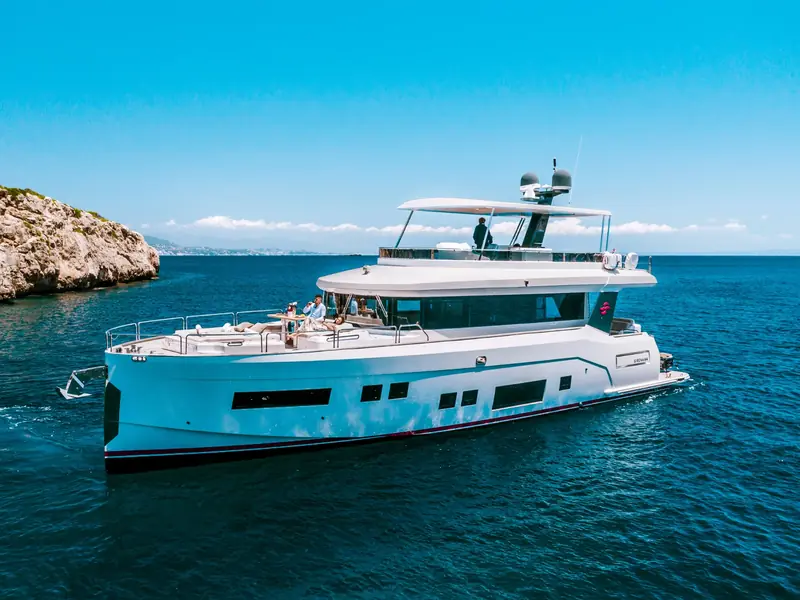
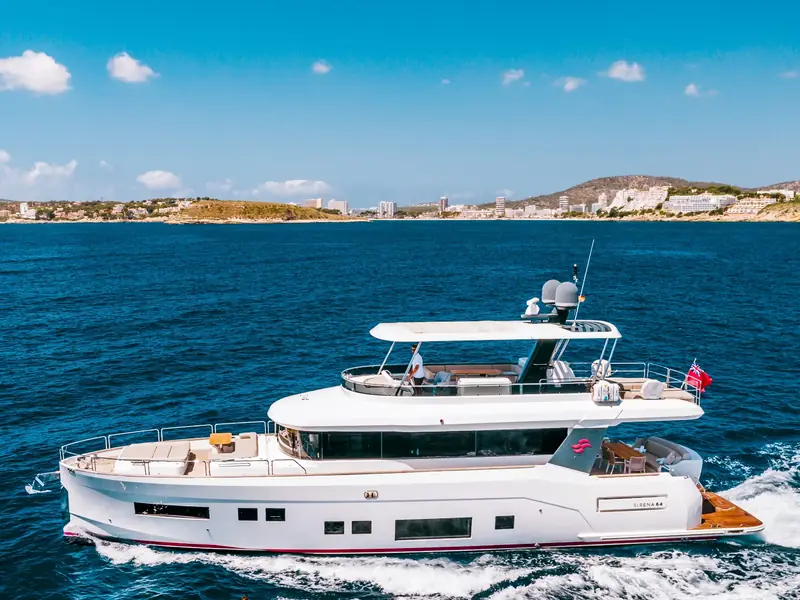
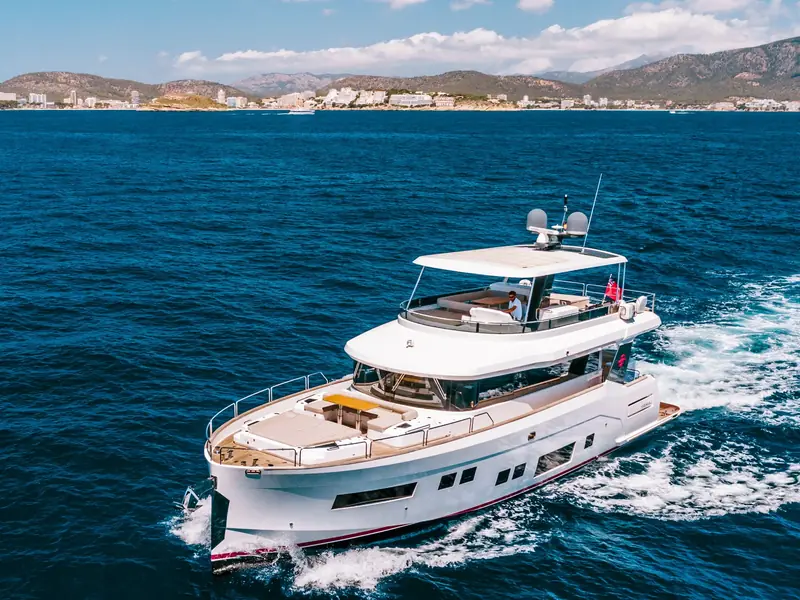
SALACIA, a Sirena 64 motor yacht, cruising at sea with a white hull and flybridge under a blue sky.
Photo: SALACIA, Sirena Yachts 64. Bluebnc Yachting managed fleet.
01

Sirena Yachts yachts in the Bluebnc managed fleet

Bluebnc Yachting, our sister company, manages these yachts in Mallorca and works with Blueward Marine as its engineering company. Yacht figures come from each yacht's public Bluebnc listing; model figures come from the builder documents and tests listed at the foot of the page. Bluebnc Yachting

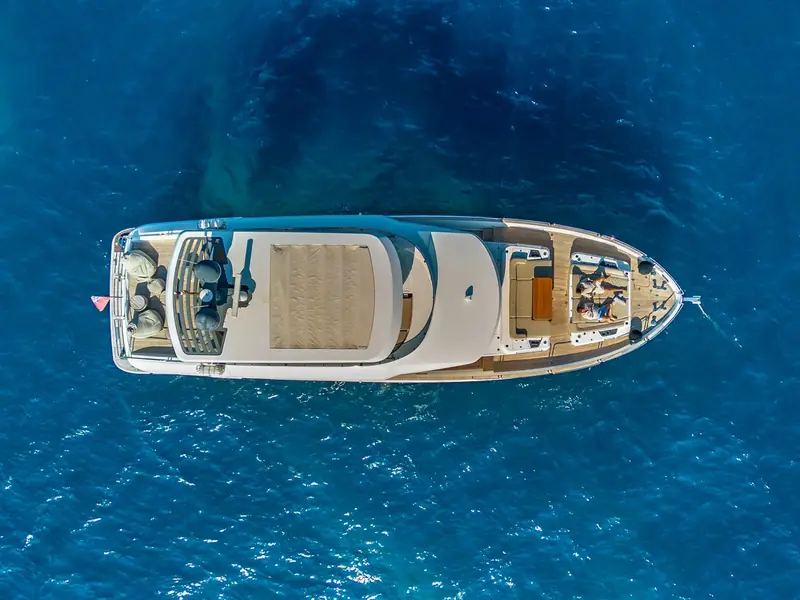
SALACIA motor yacht cruising at sea, showing the flybridge, foredeck seating, and satellite domes.

SALACIA

Sirena Yachts 64

Built
2019
Length
20.7 m
Listed power
1,700 hp
Fuel capacity
5,000 L
See SALACIA on Bluebnc

Published Sirena 64 machinery comprises twin Caterpillar C12.9 diesel inboards, rated 850 hp standard or 1,000 hp optional, with a V-drive arrangement. Period specification records twin 21.5 kW Onan generators and a hydraulic transom platform, while a tested example carried Seakeeper and a ZF joystick linked to throttles and thrusters. SALACIA is a 2019 Sirena 64 listed at 1,700 HP total, consistent with two engines at the 850 hp standard rating, with Seakeeper stabilisers and air conditioning.

Engines (published)
2 x Caterpillar C12.9, 850 or 1,000 hp (published options)
Drive
V-drive diesel inboards
Stabilisation
Seakeeper stabilisers (SALACIA listing)

First checks on this model

  • Run both main engines under load, record temperatures and pressures, and inspect raw-water pumps, heat exchangers, exhaust elbows and seawater strainers.
  • Inspect V-drive oil condition, mounts, couplings and shaft alignment, then check stern glands, cutless bearings, propellers and rudder movement.
  • Load-test both 21.5 kW generator sets, compare frequency and voltage stability, and inspect seawater flow, exhaust condition and transfer switching.
  • Review Seakeeper alarms and service history, then inspect cooling flow, vacuum readings, electrical supply and foundation fastenings before a full spin test.
Published specifications change with build year and options. Before ordering parts we confirm engine, drive and equipment serial numbers on board.

02

About Sirena Yachts

  • 01

    The Sirena 64 combines a semi-displacement GRP hull with a carbon-fibre superstructure and diesel inboards. Period specifications centre on twin Caterpillar C12.9 engines, with V-drive propulsion placing gearboxes and shaft-line components among the core service items. The arrangement calls for balanced engine loading, sound mountings and couplings, clean cooling circuits and careful alignment checks, particularly after grounding, propeller damage or machinery movement.

  • 02

    Mallorca’s warm seawater and summer heat raise cooling-system loads on engines, generators, air conditioning and the Seakeeper cooling circuit. Posidonia and sand can restrict strainers and reduce seawater flow, so pressure, temperature and discharge checks matter as much as cleaning. Short summer turnaround windows also favour planned access to V-drives, shaft seals and generator service points before faults become operational delays.

  • 03

    SALACIA is a 2019 Sirena 64 in the Bluebnc Yachting managed fleet in Mallorca, listed with 1,700 HP total, Seakeeper stabilisers and air conditioning. Bluebnc works with Blueward Marine as its marine engineering company. Blueward’s Palma workshop and mobile engineers provide support for engines, generators, cooling, stabilisation, electrical systems and propulsion.

03

Systems on these Sirena Yachts models

  1. 01

    Engine cooling

    Sirena 64 period specifications centre on twin Caterpillar C12.9 engines. In Mallorca, inspect seawater strainers first for Posidonia and sand, then assess impellers, heat exchangers, charge-air cooling, exhaust elbows and coolant condition. During a load run, compare both engines for temperature, boost, oil pressure, exhaust behaviour and any imbalance in fuel delivery.

  2. 02

    V-drive propulsion

    The Sirena 64’s V-drive layout introduces gearbox oil, mounts, couplings, shaft alignment, stern glands and cutless bearings into the propulsion inspection. Begin with oil condition, leakage and mount movement, then check coupling run-out and shaft-line condition. Vibration or changed handling after rope fouling or propeller contact warrants examination of propellers, rudders and accessible sterngear.

  3. 03

    Generators and AC

    Period specifications record twin 21.5 kW Onan generators, while SALACIA is listed with air conditioning. Start by load-testing each generator for voltage and frequency stability, then inspect seawater flow and exhaust condition. For the air-conditioning plant, check strainer cleanliness, pump delivery, condenser approach temperatures, electrical load and zone control, especially during Mallorca’s hottest operating periods.

  4. 04

    Seakeeper stabilisation

    SALACIA’s listing includes Seakeeper stabilisers, and a tested Sirena 64 carried a Seakeeper unit between the engines. First review alarms and service history, then check cooling-water flow, electrical supply, vacuum condition, oil or coolant leakage and foundation security. A controlled spin test should record spool-up behaviour, operating temperatures, noise and vibration.

Questions captains ask

Period Sirena 64 specifications give twin Caterpillar C12.9 engines at 850 hp each as standard, with 1,000 hp each optional. SALACIA’s listing states 1,700 HP total. That equals two engines at the 850 hp standard rating.

The V-drive arrangement turns power back towards the shafts, so gearbox mounts, couplings and alignment directly affect vibration and sterngear loading. On a Sirena 64, inspect mount condition, coupling run-out, shaft seals, cutless bearings and propellers as one system. A rope wrap, propeller strike or machinery movement can alter the condition of several connected components rather than one isolated item.

On a Sirena 64 fitted with Seakeeper, begin with alarm history, running hours and cooling-water flow. Inspect the electrical supply, vacuum readings, foundation fastenings and any oil or coolant leakage. During a controlled spin test, monitor spool-up time, operating temperature, noise and vibration, then check shutdown behaviour and recorded faults.

Need it fixed?

Tell us what's wrong — by phone, WhatsApp, or online with photos.

Prefer a call back?

Leave your name and number and we'll call you back. Add the yacht's name if you have it.

We call back Mon–Fri 8:00–18:00 and Sat 9:00–15:00. For an emergency, phone +34 971 251 374.