Windy yacht service in Mallorca

Blueward Marine provides engineering and technical service for Windy yachts in Mallorca, covering the 39 Camira. We service Volvo Penta D6 engines, EVC controls, raw-water cooling, electrical systems and hydraulic bathing platforms. Mobile engineers attend yachts at berths, shipyards and anchorages across Mallorca and the Balearics.

Windy began in Skarpnes, Norway, in 1966 and now has its headquarters and main production site in Västervik, Sweden.

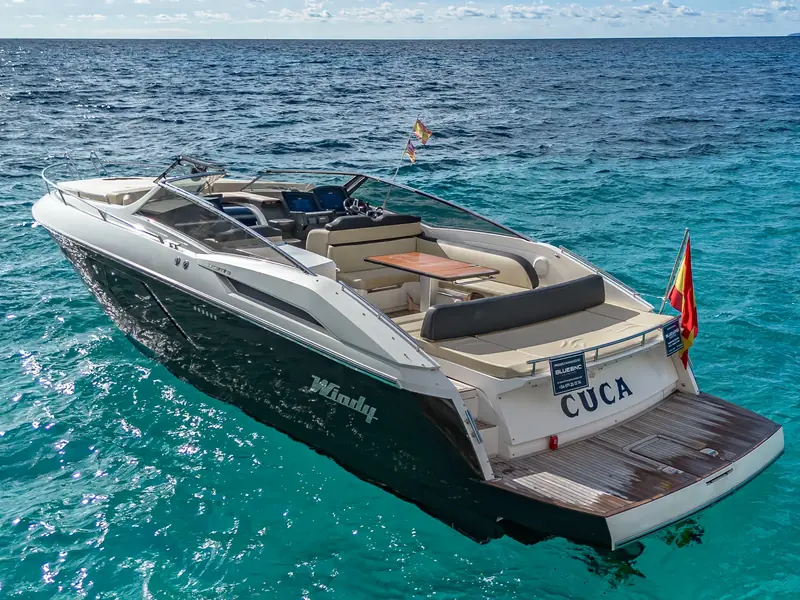
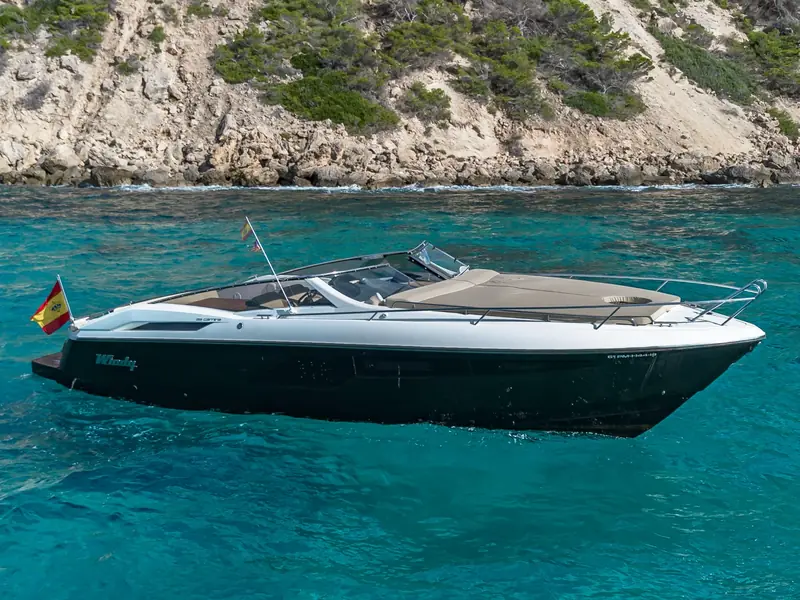
CUCA, a Windy 39 Camira motor yacht with a black hull and white superstructure, anchored in clear blue water.
Photo: CUCA, Windy 39 Camira. Bluebnc Yachting managed fleet.
01

Windy yachts in the Bluebnc managed fleet

Bluebnc Yachting, our sister company, manages these yachts in Mallorca and works with Blueward Marine as its engineering company. Yacht figures come from each yacht's public Bluebnc listing; model figures come from the builder documents and tests listed at the foot of the page. Bluebnc Yachting

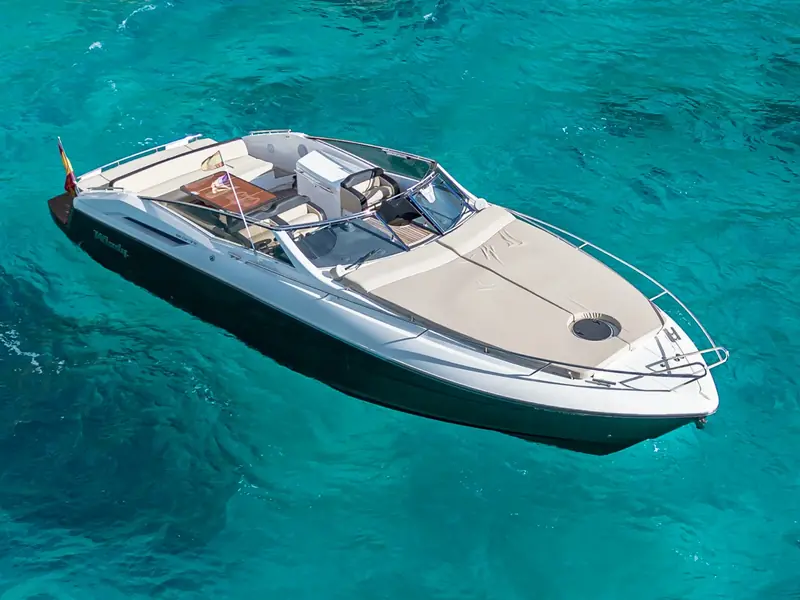
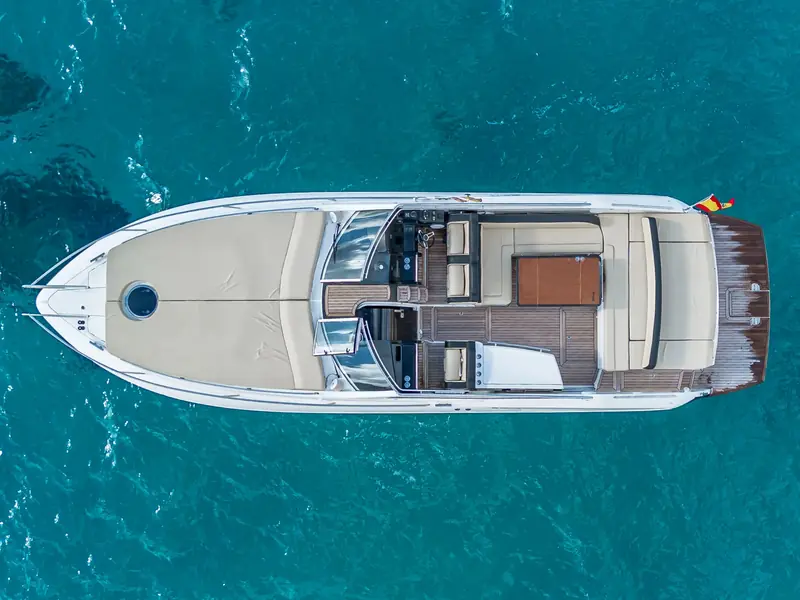
High angle view of yacht CUCA showing the foredeck sunpad and cockpit area in clear turquoise water.

CUCA

Windy 39 Camira

Built
2018
Length
12 m
Listed power
800 hp
Fuel capacity
840 L
See CUCA on Bluebnc

The Windy archive identifies the 39 Camira as a former deep-V sport cruiser. A published model review records twin Volvo Penta D6 diesels in 370-400 hp outputs, while the catalogue lists a dinghy garage and optional hydraulic bathing platform. CUCA is listed by Bluebnc as a 2018 39 Camira, 12 m long, with 800 HP total. That total is consistent with the published twin 400 hp option, and Motor Boat & Yachting groups the Camira 39 with Volvo Penta D6 sterndrive boats.

Engines (published)
2 x Volvo Penta D6, 370-400 hp (published options)
Drive
Volvo Penta Aquamatic sterndrives

First checks on this model

  • Inspect both sterndrive legs: drive oil level and colour, bellows, anodes, propellers and trim rams, and look for water in the gear oil.
  • Read EVC fault records, test throttle response and compare operating temperature, charging voltage and oil-pressure indications across both engines.
  • Open and clean raw-water strainers, then check seawater flow, hose condition, clamps, impellers and heat-exchanger performance under load.
  • Where fitted, function-test the hydraulic bathing platform and inspect its hoses, cylinders, mountings, fluid level, controls and safety interlocks.
Published specifications change with build year and options. Before ordering parts we confirm engine, drive and equipment serial numbers on board.

02

About Windy

  • 01

    Windy identifies the 39 Camira as a deep-V sport cruiser, an approach intended for planing performance rather than low-speed displacement work. Windy also describes deep-V hull development and resin-transfer moulding in its current production. For engineering attendance, the practical priorities are machinery-space access, secure hose and cable routing, clean bilges and a clear view of any leaks under operating load.

  • 02

    Published 39 Camira material specifies twin Volvo Penta D6 diesels from 370 to 400 hp. The D6 is a 5.5-litre inline-six common-rail engine with turbocharging and Electronic Vessel Control. In Mallorca, warm seawater and summer heat put cooling flow and ventilation high on the checklist. Sand and Posidonia in strainers can reduce flow quickly, particularly when operating turnarounds are short.

  • 03

    CUCA, a 2018 Windy 39 Camira listed at 12 m and 800 HP, is in the Bluebnc Yachting managed fleet in Mallorca. Bluebnc works with Blueward Marine as its marine engineering company. This relationship provides engineering support within the wider management structure, with each attendance scoped from the yacht’s recorded machinery and reported symptoms.

03

Systems on these Windy models

  1. 01

    Main engines

    On the 39 Camira, published power options use twin Volvo Penta D6 diesels. An engineer first checks fluid levels, leaks, belts, mounts, filters and service records, then compares both engines at idle and under load. Unequal temperature, boost response, charging voltage or exhaust appearance can point towards cooling, fuel, air or control faults.

  2. 02

    Raw-water cooling

    Mallorca’s warm seawater increases the importance of unrestricted cooling flow. The first checks are the strainers, seacocks, hoses, clamps and impellers, followed by operating temperatures and exhaust-water discharge. Sand or Posidonia can obstruct strainers after shallow anchoring, while salt deposits and restricted heat exchangers may only become apparent when the D6 engines are loaded.

  3. 03

    EVC and electrics

    Volvo Penta describes the D6 with Electronic Vessel Control, linking engine information and control functions at the helm. Fault finding starts with stored alarms, battery condition, charging voltage, earth connections and network supply. Engineers then compare the reported symptom with live engine information, control response and any recent electrical work before replacing modules or helm components.

  4. 04

    Platform hydraulics

    The 39 Camira catalogue lists a hydraulic bathing platform as an option. Where installed, the inspection covers hydraulic fluid, hoses, unions, cylinders, pins, mountings, controls and safety interlocks. Slow, uneven or hesitant movement can result from leakage, trapped air, low voltage or mechanical loading, so operation should be observed through a complete controlled cycle.

Questions captains ask

Published power options for the 39 Camira are twin Volvo Penta D6 diesels in 370 to 400 hp ratings, and Motor Boat & Yachting groups the Camira 39 with D6 sterndrive boats. Bluebnc lists CUCA at 800 HP total, consistent with the twin 400 hp option. Confirm engine and drive-leg serial numbers before ordering parts, because D6 ratings and sterndrive legs differ between generations.

Start with the exact alarm history and the operating conditions when it appeared. Check battery voltage, charging output, earth connections and network power before testing engine sensors or control components. Compare both D6 engines for temperature, oil pressure and control response. This helps separate an engine-side fault from a supply, network or helm-control problem.

Inspect the hydraulic reservoir, fluid condition, hoses, unions, cylinders, pins and structural mountings. Run the platform through a controlled full cycle while checking for leakage, uneven travel, pump noise and voltage drop. Controls and safety interlocks should operate consistently, and the platform should stop securely without creeping or placing side load on the cylinders.

Prefer a call back?

Leave your name and number and we'll call you back. Add the yacht's name if you have it.

We call back Mon–Fri 8:00–18:00 and Sat 9:00–15:00. For an emergency, phone +34 971 251 374.